
Introducing ecoTask 3: Built on 20 Years of Experience
The story of ecoTask’s 20-year journey—from discovering GTD in 2005 and building LifeManager to rebuilding it as a modern app service.
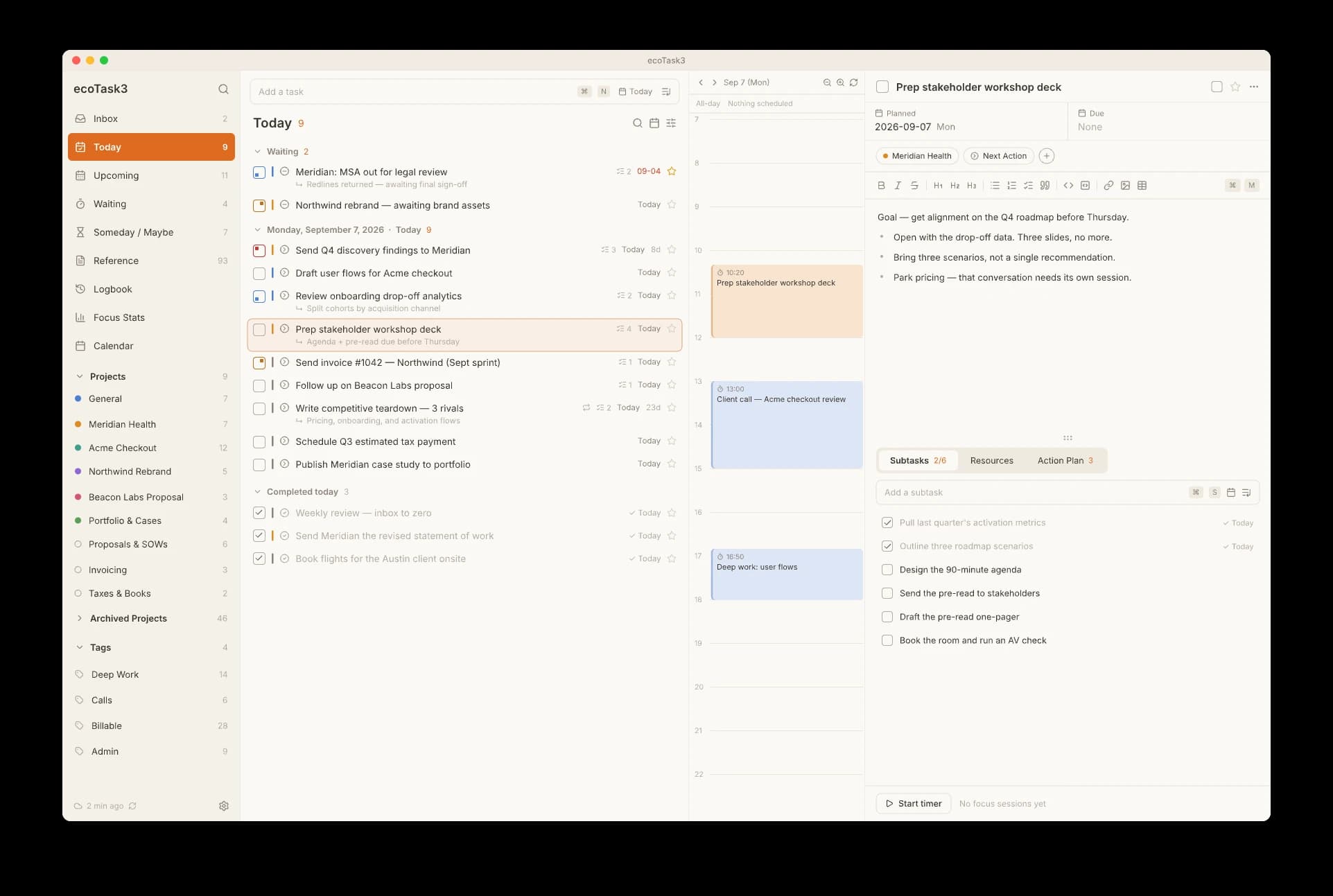
Hello, I’m Jay Rhee, the developer of ecoTask, a task management system.
With the release of ecoTask 3, I took a moment to look back. It all began in 2005, when I first discovered David Allen’s Getting Things Done, better known as GTD.
When I read about GTD, I immediately thought, “This is it.”
The idea was simple but powerful: get everything out of your head and put it into a trusted system. As someone who always had too much to do and too much on his mind, it felt like exactly the approach I needed.
But after finishing the book, I ran into a new problem.
“What am I supposed to use to manage all of this?”
Should I use paper, a spreadsheet, or one of the software applications available at the time? GTD offered excellent principles, but I couldn’t find a tool that helped me put those principles into practice. The freedom to use any tool I wanted felt less liberating than overwhelming.
So I decided to build one myself.
Building the Tool I Needed
In 2008, I developed a task management application called LifeManager.
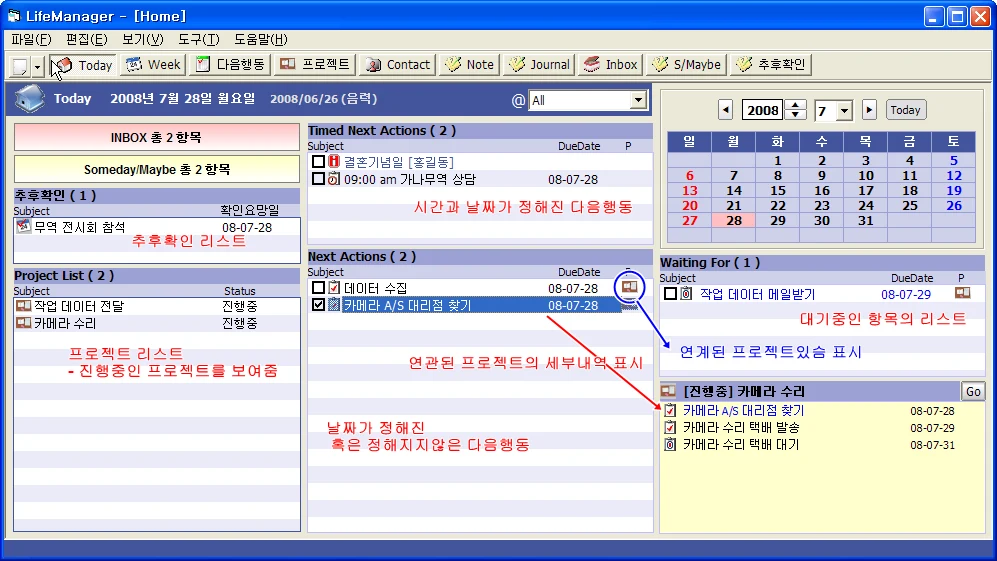
An early screen from LifeManager v1
It wasn’t originally intended to be a commercial product. I wanted to put GTD into practice, and I needed a tool I could rely on every day.
I soon discovered that understanding a methodology and turning it into working software were two very different things.
A concept such as the “next action” might take only a few lines to explain in a book, but representing it properly in software required many decisions. How should projects and tasks relate to one another? How should contexts and priorities be organized? Even a small feature involved a great deal of thought and trial and error.
In the end, when I began using the program, I found that it worked surprisingly well. As I continued refining it, I could see a real difference in how I organized both my work and my personal life.
I wanted to share something I had found genuinely useful, so I refined the program and began releasing it for free. At first, I simply hoped that a few people might find it helpful. Instead, far more people than I expected downloaded it, used it, and sent me thoughtful feedback.
I fixed problems, added features, and released new versions based on their suggestions. Whenever I found something inconvenient in my own daily use, I improved it. Whenever users proposed a new idea, I considered how it might fit into the system.
What began as a personal tool gradually became software used by many others. Over time, the program evolved and took on a new name: ecoTask.
Inspired by GTD, but Not Limited to GTD Users
GTD is clearly part of ecoTask’s foundation.
Its core principles are deeply embedded in the way ecoTask works: capturing everything that has your attention, turning vague intentions into concrete actions, organizing multi-step outcomes as projects, and choosing what to do based on your current situation.
But ecoTask is not a specialized tool that only GTD experts can use. You don’t need to study GTD terminology or learn an entire set of rules before getting started.
If you already know GTD, you will recognize many of its concepts in ecoTask’s structure. If you have never heard of GTD, you should still be able to start using ecoTask as a straightforward task management app.
ecoTask is designed to be a general-purpose task management system that helps anyone organize tasks and projects more effectively. I don’t want people to study a productivity methodology before they can use the app. I want the app itself to help them develop a better way of managing their work, naturally and gradually.
Development Paused, but People Kept Using It
I continued to improve and distribute ecoTask for a while, but as work and everyday responsibilities grew, it became difficult to devote as much time to development as I once had.
Updates became less frequent. As software moved toward mobile devices and cloud-based services, ecoTask remained a traditional desktop application.
But one thing never changed.
I kept using it.
And I wasn’t the only one.
Even after official updates had been paused for years, some people continued using the original version of ecoTask. They reported bugs, suggested features, and waited patiently for the program to evolve again.
I would like to take this opportunity to sincerely thank everyone who continued trusting an aging application with their tasks and projects. Your feedback and continued interest over the years provided an essential foundation that allowed ecoTask to endure.
I also tried many of the new task management apps that appeared over the years. Yet I repeatedly found myself returning to the system I had built.
ecoTask didn’t endure because it was perfect. It endured because it had been shaped through real, everyday use. I removed what was unnecessary, simplified what was too complicated, and kept the ideas that consistently proved useful.
I never tried to reproduce the original GTD methodology exactly as written. I adapted the parts that didn’t fit the realities of everyday work and simplified procedures that created more friction than value. If something didn’t work, I removed it. If something was inconvenient, I redesigned it.
I’m not a productivity theorist. I’m a practitioner who has spent the past 20 years managing tasks and projects—and building the tool I needed along the way.
Bringing an Established Application into a New App Service
The way people use software—and what they expect from an app service—has changed dramatically.
ecoTask needs to evolve with that world.
Rather than simply restoring the old program, I decided to rebuild it as a modern app service.
The experience built into the original application is being redesigned for an evolving service ecosystem. Its aging interface and technology will change, but the core principles tested and refined through years of daily use will remain.
The technology may change, but the purpose of ecoTask remains the same.
I don’t want to create an app that simply helps people accumulate more tasks. I want to create a tool that makes it clear what they should do next.
I don’t want to build complicated features simply to make the product appear powerful. I want to reduce mental clutter and help people take meaningful action.
And I don’t want ecoTask to be another app people try briefly and then abandon. I want it to become a system they can trust with their work and lives for years—one that builds on all of their accumulated experience and helps them grow.
Making ecoTask Available to More People
The previous version of ecoTask supported international languages such as English, but I never made a serious effort to introduce it to users outside Korea. The new ecoTask will support a wider range of languages and environments, with the goal of growing into a global task management service that helps people around the world manage their tasks and projects.
Work environments and cultures differ, but the need to organize what we have to do is universal. So is the desire to clear our minds and focus on what matters most.
ecoTask will not be designed for one country or for followers of one particular productivity methodology. It should be intuitive regardless of language and flexible enough to support different ways of working.
Users should be able to begin with a simple task list and gradually expand into projects and a more structured workflow as their needs grow.
ecoTask may have its roots in GTD, but its potential is not limited by the GTD label.
Sharing 20 Years of Trial and Error
ecoTask will not be the perfect answer for everyone. People do different kinds of work and organize their thoughts in different ways.
I didn’t begin with all the answers, either. I tried many approaches, made mistakes, and revised the system repeatedly. ecoTask contains the lessons accumulated through that long process.
Here, I will write not only about ecoTask’s features, but also about the problems I encountered while applying GTD in everyday life, why task lists can sometimes create more stress, how to carry projects through to completion, practical ways to build a personal management system, and my own reflections.
There may be no single right answer, but I hope the lessons I learned through years of trial and error can offer someone else a small shortcut.
ecoTask is a service grounded in the experience that began when I discovered GTD in 2005, continued when I developed and released my first task management program for free in 2008, and grew through years of daily use and refinement.
For people who know GTD, I hope ecoTask becomes a practical way to put their system into action. For people who do not know GTD, I hope it becomes a convenient task management app that makes a busy life easier to organize.
And across languages and borders, I hope ecoTask becomes a trusted companion for people who want to organize their work and focus on what matters most.
I hope the program that has been my companion for 18 years can now be used by many more people.
I hope you’ll join me as ecoTask begins its next chapter.
Thank you.
Jay Rhee
Developer of ecoTask